Why Does Furniture Get Wobbly?
We get a lot of wobbly chairs through our front door with one simple request: make it stop wobbling. More often than not, someone has already tried to fix it. Maybe there is extra glue squeezed around the joints. Maybe a screw has been added somewhere it was never meant to be. Sometimes there is an impressive combination of glue, nails, brackets, and determination holding everything together.
I understand the instinct. If a joint is loose, adding glue or nailing it together seems like the obvious solution. But a wobble is usually a symptom. The real question is: Why did the joint become loose in the first place?
Furniture moves more than you think
Every time you sit in a chair, lean against the back, pull it across the floor, or shift your weight, you put pressure on its joints. A table gets pushed, bumped, lifted, dragged, and occasionally used in ways it was never designed for.
Over years of use, those small movements add up. Wood itself also expands and contracts as humidity changes. The movement is usually slight, but furniture joints have to accommodate it year after year. Eventually an old adhesive can fail, a dowel can loosen, or a mortise-and-tenon joint can begin to move.
Once movement starts, it tends to create more movement.
And the problem does not necessarily stay where it began. Furniture depends on its parts working together, and with a chair especially, the structure depends on staying square. If one joint becomes loose or one part begins to shift, the load changes throughout the piece. That can put a great deal of stress on another joint somewhere else.
Think about someone walking with one leg in a cast. Protecting one side changes the way the rest of the body carries the load, and the opposite knee may suddenly be doing work it was never meant to do. A chair can behave in much the same way. A weakness in one corner may eventually show up as damage somewhere completely different.
That is one reason we do not automatically assume the visibly loose joint is the only problem.
Why more glue often doesn't fix it
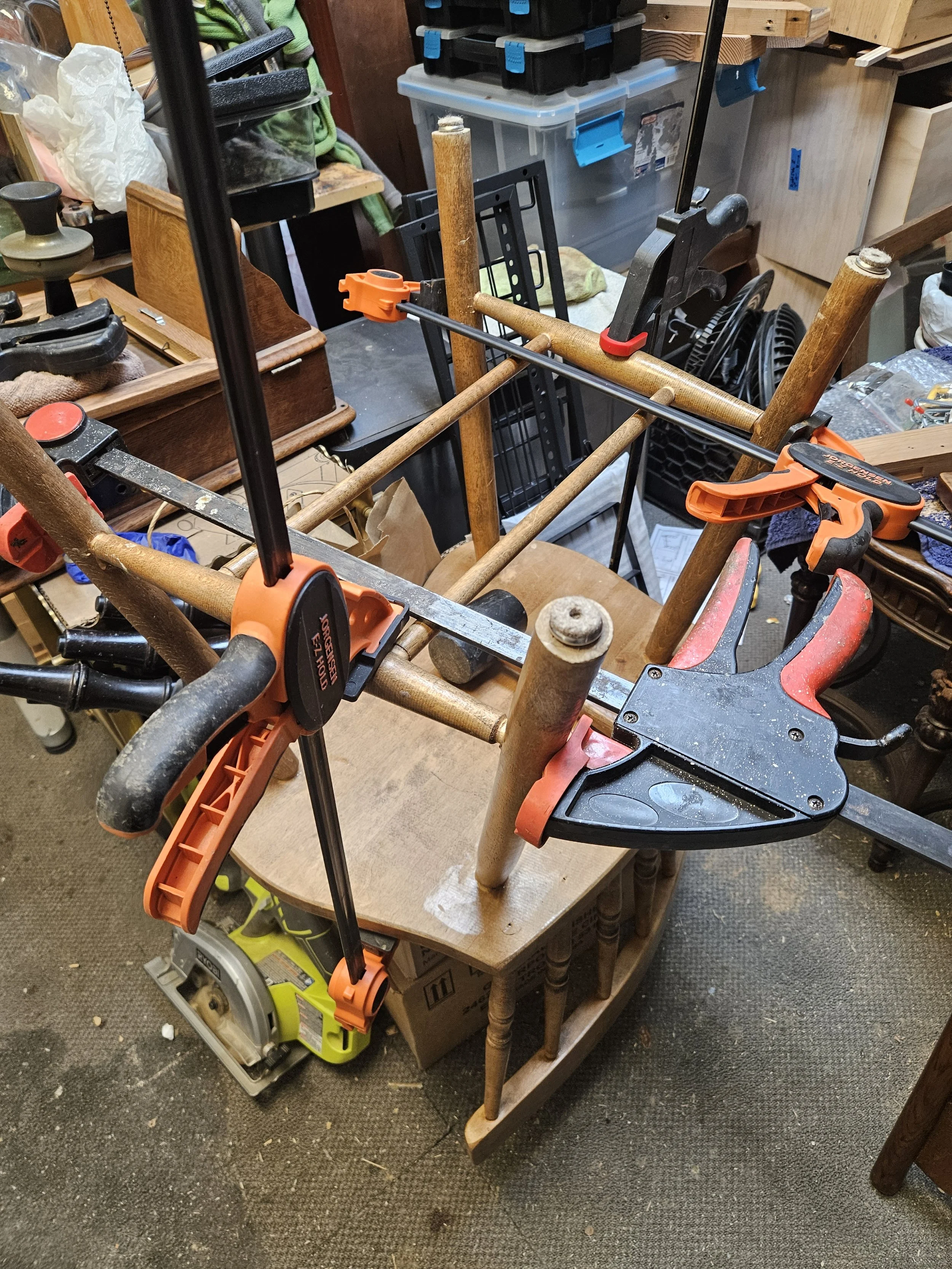
Glue works best when two properly fitting surfaces are clean and held tightly together while the adhesive cures. That is very different from squeezing fresh glue into the outside of an already loose joint.
Old glue may still be inside the joint, keeping the wood from making a firm connection. The wood surfaces may no longer fit tightly. A dowel may be worn, a tenon may be damaged, or the opening itself may have enlarged after years of movement. Fresh glue applied over old glue or into a gap cannot restore the original fit of the joint.
It may make the furniture feel tighter for a little while, but the underlying problem is still there.
A proper repair starts with finding the loose joint
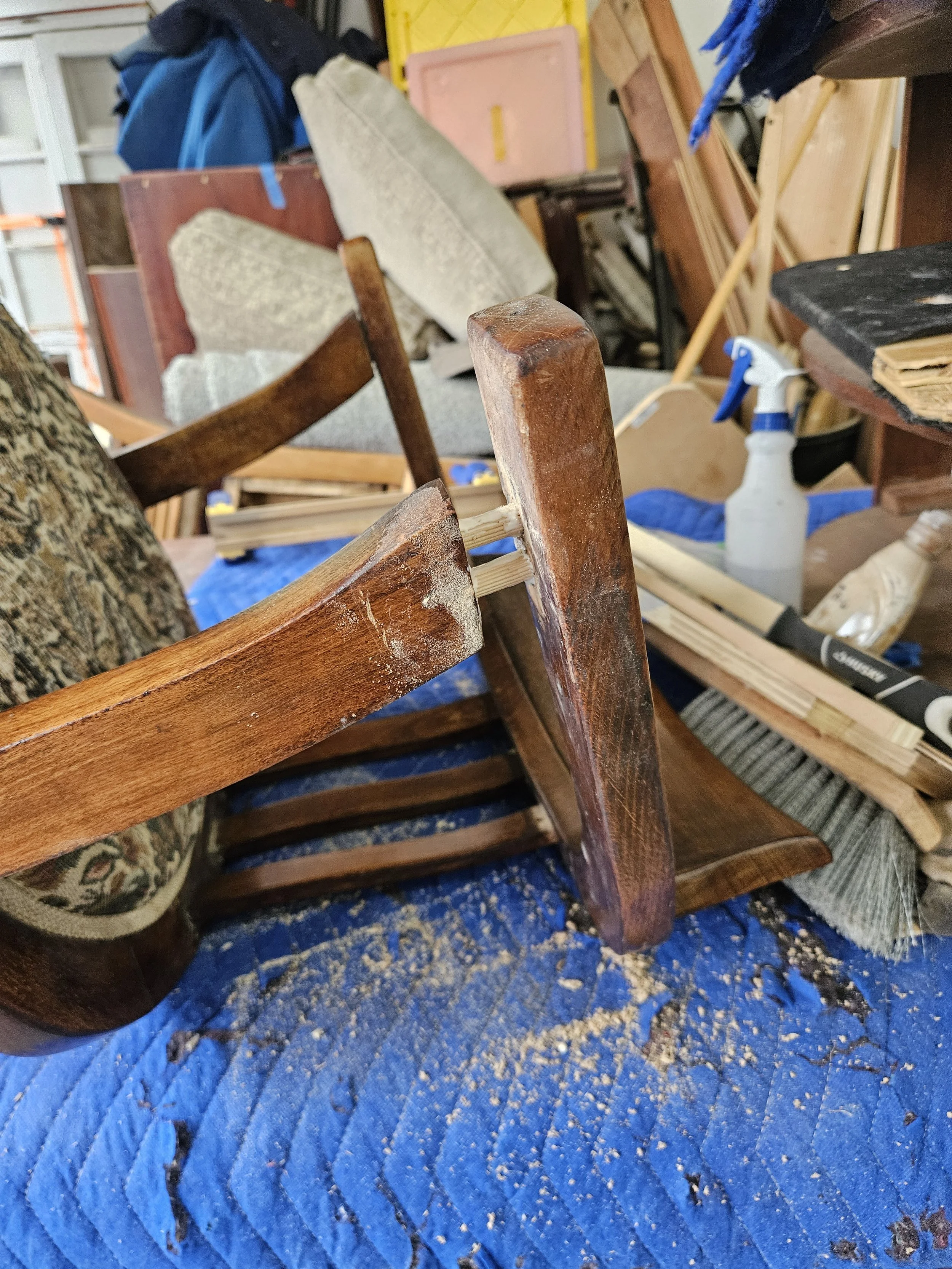
This is often the most important part of the repair. The piece has to be carefully examined to determine exactly where the movement is coming from. On a chair, what feels like one loose leg may actually involve several joints working against each other.
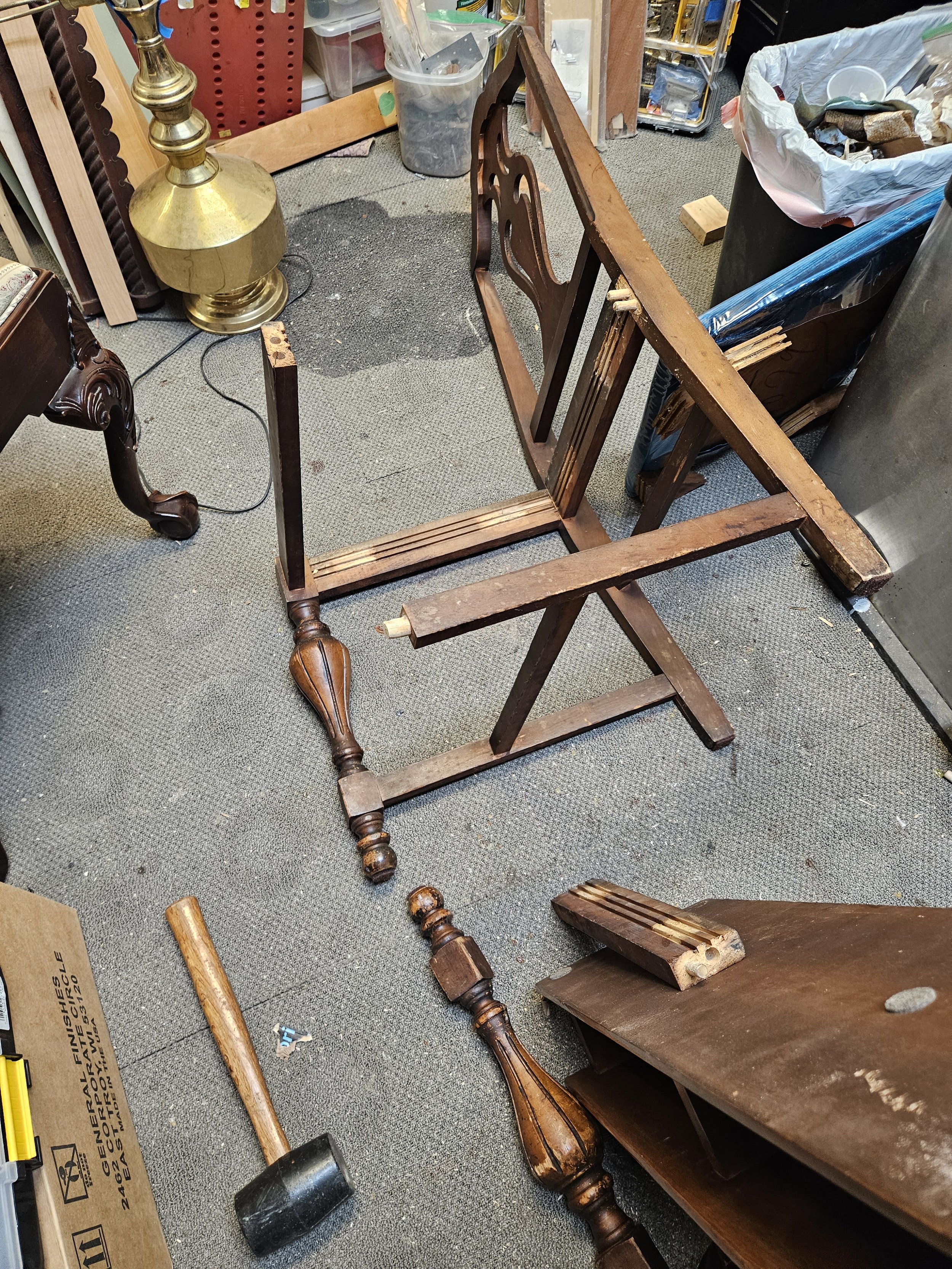
Sometimes the repair requires carefully taking part of the piece apart. Once the joint is accessible, the old adhesive can be removed and the wood inspected. If the original joint is still sound, it may simply need to be cleaned, reglued, properly aligned, and clamped.
If the joint itself has worn or broken, more work may be necessary. A damaged dowel may need to be replaced. A worn tenon may need to be rebuilt. Missing wood may have to be repaired before the joint can fit tightly again.
Depending on the chair and the repair, we will sometimes add additional mechanical support as well. We often countersink a screw at an angle through the joint or dowel area to reinforce the repair. The screw head is then covered with wood filler and refinished to match the surrounding chair so the reinforcement is not visually obvious.
The goal is not simply to make the wobble disappear. The goal is to restore the structure that was supposed to prevent the wobble in the first place.
What about screws and brackets?
Screws have their place, as the repair above illustrates, but simply driving a screw through a loose joint from the outside is not the same thing as properly repairing and reinforcing it.
A screw added without understanding the joint can split the wood, damage the original joinery, or make a later repair considerably more complicated. Metal corner brackets can have the same problem. Sometimes they are appropriate. Sometimes they are simply covering up a joint that is continuing to fail underneath.
The important distinction is whether the hardware is being used as part of a considered structural repair or simply as an attempt to stop movement without addressing its cause.
Don't ignore a small wobble
One of the easiest ways to turn a simple repair into a complicated one is to keep using furniture after a joint becomes noticeably loose. That little bit of movement begins wearing the surrounding wood. The longer it moves, the larger the gap can become.
A chair that originally needed a straightforward reglue may eventually need a joint rebuilt because it was used for another few years while loose. And because the entire structure works together, continued use can also begin damaging joints that were perfectly sound when the original wobble started.
Of course, a loose chair can eventually become an unsafe chair as well. If something suddenly starts rocking, twisting, or shifting when it did not before, it is worth taking a closer look.
Old furniture was meant to be repaired
One thing I appreciate about well-made older furniture is that much of it was constructed in a way that allows it to be taken apart, repaired, and put back into service.
A loose joint does not necessarily mean a piece has reached the end of its useful life. Often it simply means one part of the structure needs attention. We repair chairs and tables that have already served several generations and, with the right repair, may easily serve another one.
So the next time a chair starts rocking or a table develops a mysterious little wiggle, resist the urge to reach immediately for the glue bottle.
First ask the more useful question:
What is actually moving, and why?
Because when it comes to furniture repair, fixing the cause almost always works better than hiding the symptom.
If you have a chair, table, or other piece that has started to wobble, twist, or loosen, Furniture Rescue can take a look and help determine what is actually failing before the problem gets worse.